
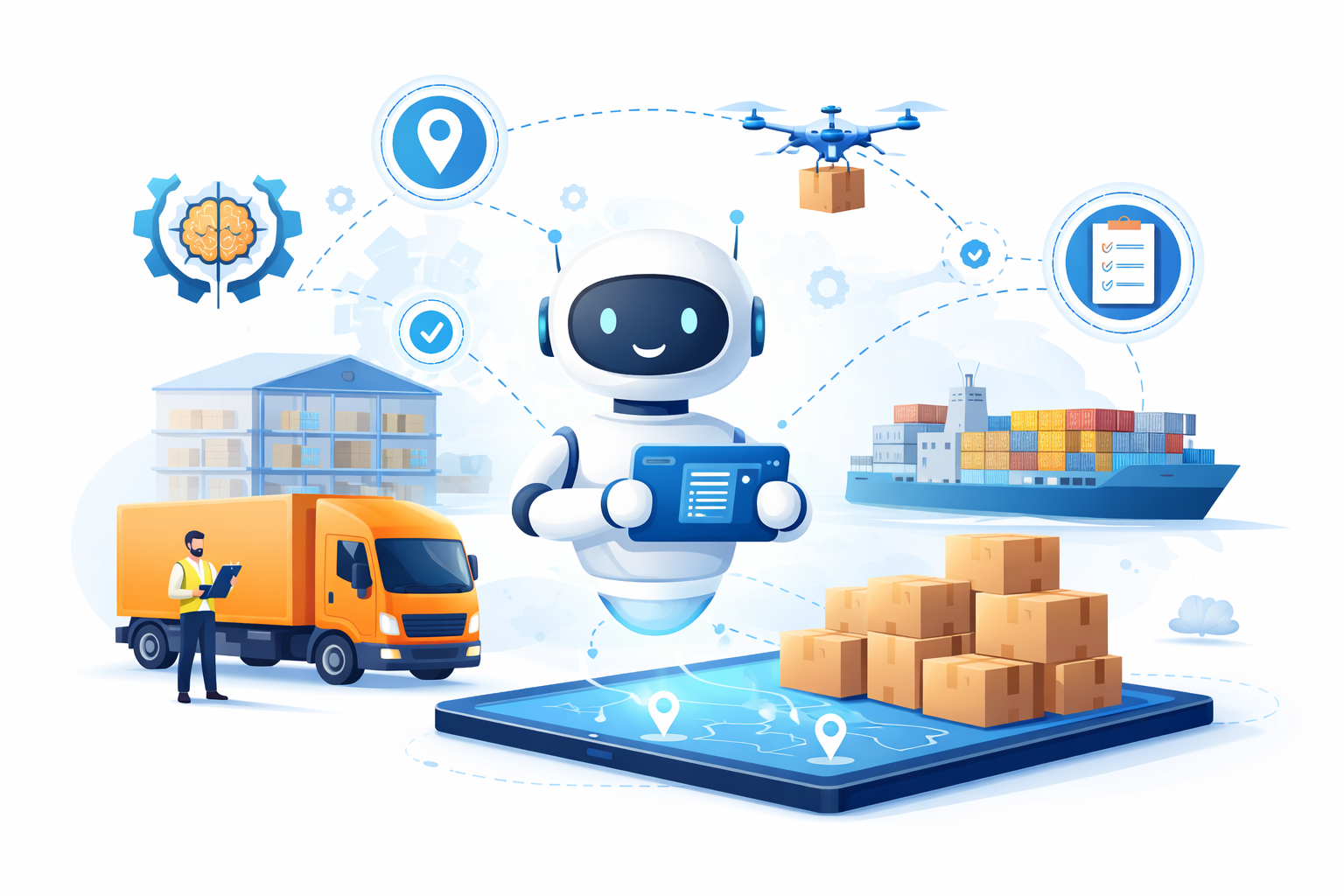
The logistics industry is expected to expand to USD 23.14 trillion by 2034, but this industry has always been a complex industry to operate in. It faces multiple challenges—ranging from delays and rising fuel costs to unpredictable demand, legacy digital systems, and constant pressure to deliver faster while staying competitive.
It is also an industry that often requires customized solutions. However, adapting to new systems and ways of working remains slow and challenging.
This is where advanced, AI empowered, data-driven systems are beginning to make a meaningful difference, not as a replacement for people, but as a support mechanism that helps logistics teams work smarter and adapt better to changing conditions.
Let's look at a few common challenges and how AI is helping address them.
How AI Addresses Key Logistics Challenges
1. Handling Ad-Hoc Volume
One of the biggest challenges in logistics is forecasting demand accurately and preparing for sudden volume changes. Traditional methods rely heavily on historical data, which often fails to capture unexpected disruptions, such as those seen during the pandemic.
Today, AI systems can factor in real-time inputs like weather conditions, market trends, seasonal patterns, and customer behavior. This allows companies to adjust inventory levels and transportation plans in advance, reducing both overstocking and stock shortages.
Key Benefits:
- Real-Time Forecasting: Factor in weather, market trends, and customer behavior
- Proactive Planning: Adjust inventory and transportation plans in advance
- Reduced Waste: Minimize overstocking and stock shortages
2. Route Optimization
Route planning is no longer just about the shortest distance. Traffic congestion, fuel prices, delivery windows, and vehicle capacity all play a major role. AI route-planning tools consider all these factors to design more efficient delivery paths.
In many cases, this also leads to near zero-cost optimizations, small changes such as better load sequencing, smarter delivery clustering, or avoiding high-toll and high-idle zones. The result is lower fuel consumption, faster deliveries, reduced operational costs, and improved customer satisfaction.
Route Optimization Advantages:
- Multi-Factor Analysis: Consider traffic, fuel prices, delivery windows, and capacity
- Cost Savings: Lower fuel consumption and reduced operational costs
- Smart Clustering: Optimize delivery sequencing and avoid high-toll zones
- Customer Satisfaction: Faster deliveries and improved service quality
3. Addressing Labor Shortages
Finding and retaining qualified labor remains a challenge in the logistics industry. High turnover, seasonal demand ups and downs, and the need for skills make workforce planning difficult.
This is where AI technology can be supportive. AI-enabled workforce planning solutions help anticipate demand peaks and align staffing needs in advance, reducing last-minute hiring pressure.
At the same time, insights help identify skill gaps and support training and development programs. This improves employee onboarding, boosts retention, and creates a more balanced workload.
Workforce Planning Benefits:
- Demand Anticipation: Predict demand peaks and align staffing in advance
- Reduced Hiring Pressure: Minimize last-minute hiring needs
- Skill Development: Identify skill gaps and support training programs
- Improved Retention: Better onboarding and balanced workloads
4. Making Warehouses Efficient
Warehouses often struggle with inefficiencies caused by manual processes and limited visibility. Smarter AI systems help by anticipating inventory movement, improving storage layouts, and streamlining picking and packing activities.
Over time, this results in fewer errors, quicker order fulfillment, and better use of available space.
Warehouse Efficiency Benefits:
- Inventory Anticipation: Predict inventory movement patterns
- Optimized Layouts: Improve storage organization and accessibility
- Streamlined Operations: Automate picking and packing processes
- Error Reduction: Fewer mistakes and faster order fulfillment
5. Elevating Decision-Making
Another major challenge in logistics is working with no information. When procurement, warehousing, transportation operate in isolation, decisions become inaccurate or misaligned.
Shared visibility and connected systems ensure that teams work with the same, up-to-date information. This leads to clearer communication, faster decisions, and better outcomes across the supply chain.
Decision-Making Enhancement Benefits:
- Shared Visibility: All teams work with the same up-to-date information
- Connected Systems: Integrate procurement, warehousing, and transportation
- Faster Decisions: Clear communication and aligned decision-making
- Better Outcomes: Improved results across the entire supply chain
Want to know more? Connect with us to learn about AI solutions designed for the logistics industry.