
DPDP Act: What does your business need to do to comply?
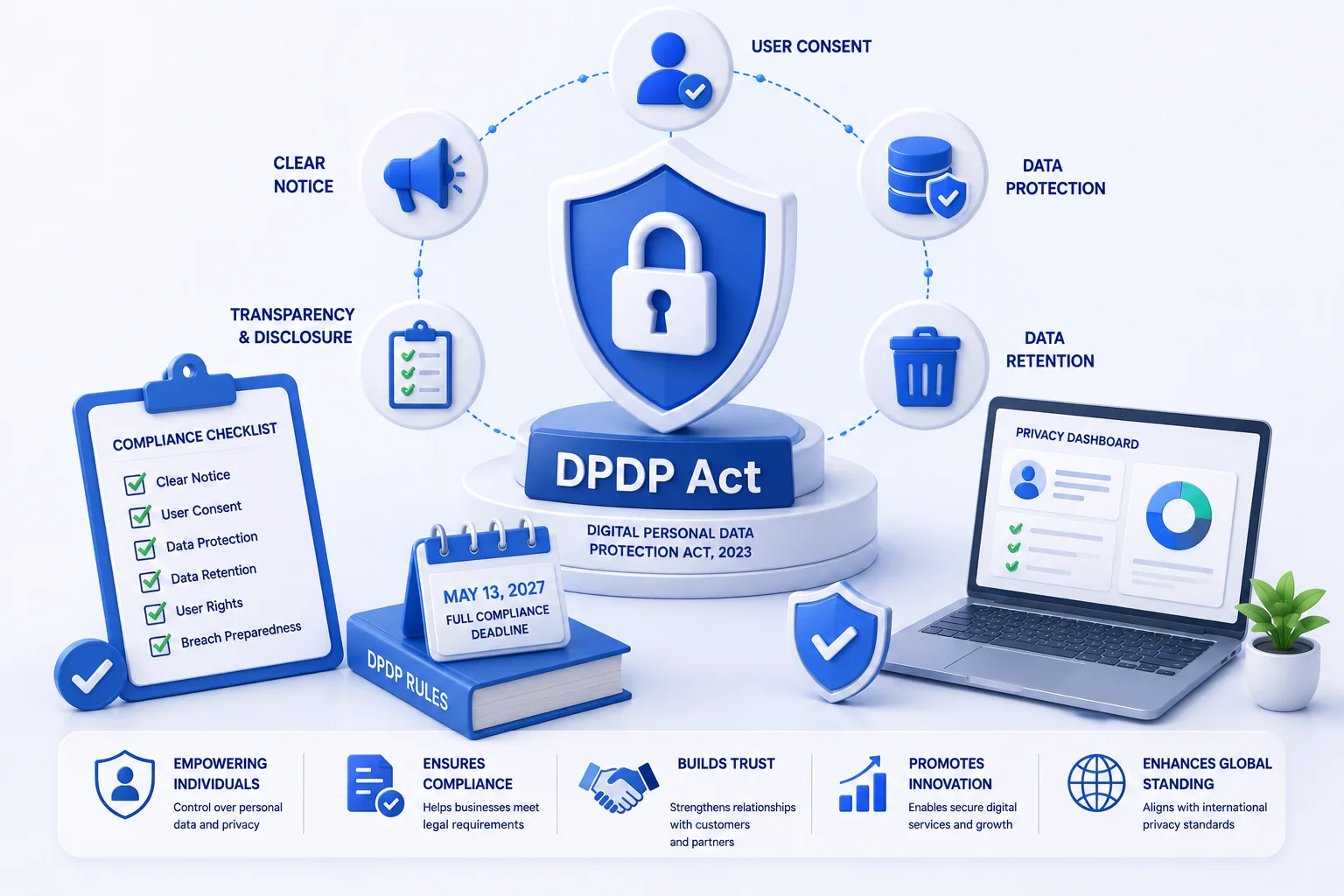
Today, businesses use personal data in many areas, such as marketing, sales, and decision-making. As more personal information resides online, protecting people's data has become more important. Many countries already have privacy laws to protect personal data. The EU has GDPR, China has PIPL, and Singapore has PDPA.
India has now introduced its own law, the Digital Personal Data Protection (DPDP) Act, 2023. The Act puts more responsibility on businesses for how they collect, use, store, and protect personal data. In this blog post, let's discuss what DPDP is, how it is going to impact your business, and how to be ready for it.
What is the DPDP Act?
The Digital Personal Data Protection Act, 2023 is India's law for handling digital personal data. In simple terms, it sets rules for how businesses should collect and use people's personal data. One of the main parts of the Act is consent. When consent is required, people should know what they are agreeing to and why their data is being collected. They should also be able to withdraw their consent when they want.
The Rules also say that notices given to users should be clear and easy to understand. Businesses need to explain what personal data they are collecting and why they need it. They also need to give people a way to withdraw consent and use their rights. This is especially important for businesses that collect personal data through websites, apps, forms, and other digital platforms.
Important Timeline to Remember
The DPDP Rules were notified on November 13, 2025. Rules 1, 2, and 17–21 came into effect immediately. Rule 4 takes effect one year after publication. Most crucially, Rules 3, 5–16, 22, and 23 come into effect 18 months after publication (May 13, 2027).
What do businesses need to do?
1. Give clear notice
The first step is to give users a clear notice. Users should understand what personal data is being collected and why it is being used. The DPDP Rules require businesses to use clear and simple language. They also need to explain what personal data is being collected and the purpose of collecting it.
Businesses should look at all the places where they collect personal data. This includes privacy notices, website forms, mobile apps, registration pages, consent banners, marketing forms, and customer onboarding processes. The main idea is to make privacy information easy to understand instead of hiding it in long and complicated legal language.
2. Implement consent management
Businesses also need a proper way to collect and manage consent when consent is required. But collecting consent is only one part of the process. Businesses also need to keep records of consent and allow users to review and manage their choices. The Rules also include requirements around Consent Managers, including giving people a way to give, manage, review, and withdraw consent.
Another important part is making it easy for users to withdraw consent. It should not be easy for someone to say "yes" and difficult to say "no." The DPDP Rules say that withdrawing consent should be as easy as giving it. This means businesses need to treat consent as something that can change over time, rather than a one-time checkbox.
3. Protect personal data
Businesses also need to protect personal data after collecting it. Consent alone does not protect the data. The DPDP Rules include requirements for reasonable security measures to protect personal data from unauthorized access and other security incidents. There are also requirements around reporting personal data breaches. This means businesses need to make sure privacy and security work together to protect personal data.
4. Data storage and retention
Businesses also need to think about how long they keep personal data. If the data is no longer needed for the reason it was collected, the business should review whether it still needs to keep it. The DPDP Rules include requirements around data retention, and these can vary depending on the business and the rules that apply to it.
Businesses should have a clear understanding of what personal data they have, where it is stored, why they collected it, how long they need it, and when it should be deleted or anonymized. Having a clear process for managing data can also help businesses avoid keeping personal data longer than necessary.
Conclusion
Businesses do not need to change their entire technology setup to start preparing for the DPDP Act. CloudZent brings you PrivacySuraksha to manage how your website collects personal data, where it goes, and how users can control it. PrivacySuraksha tool can make these processes easier to manage and help businesses keep proper records.
Businesses also get to review their privacy notices, consent process, data storage, data retention, and user choices. They can make sure users have a simple way to withdraw consent and exercise their rights. Want to get started today? Contact us here to talk to our experts.
Related Articles
Ready for DPDP Act?
Leverage CloudZent's PrivacySuraksha to simplify compliance and manage user consent securely.
Talk to an Expert