
How can you hire 60% better candidates with an AI interview tool?
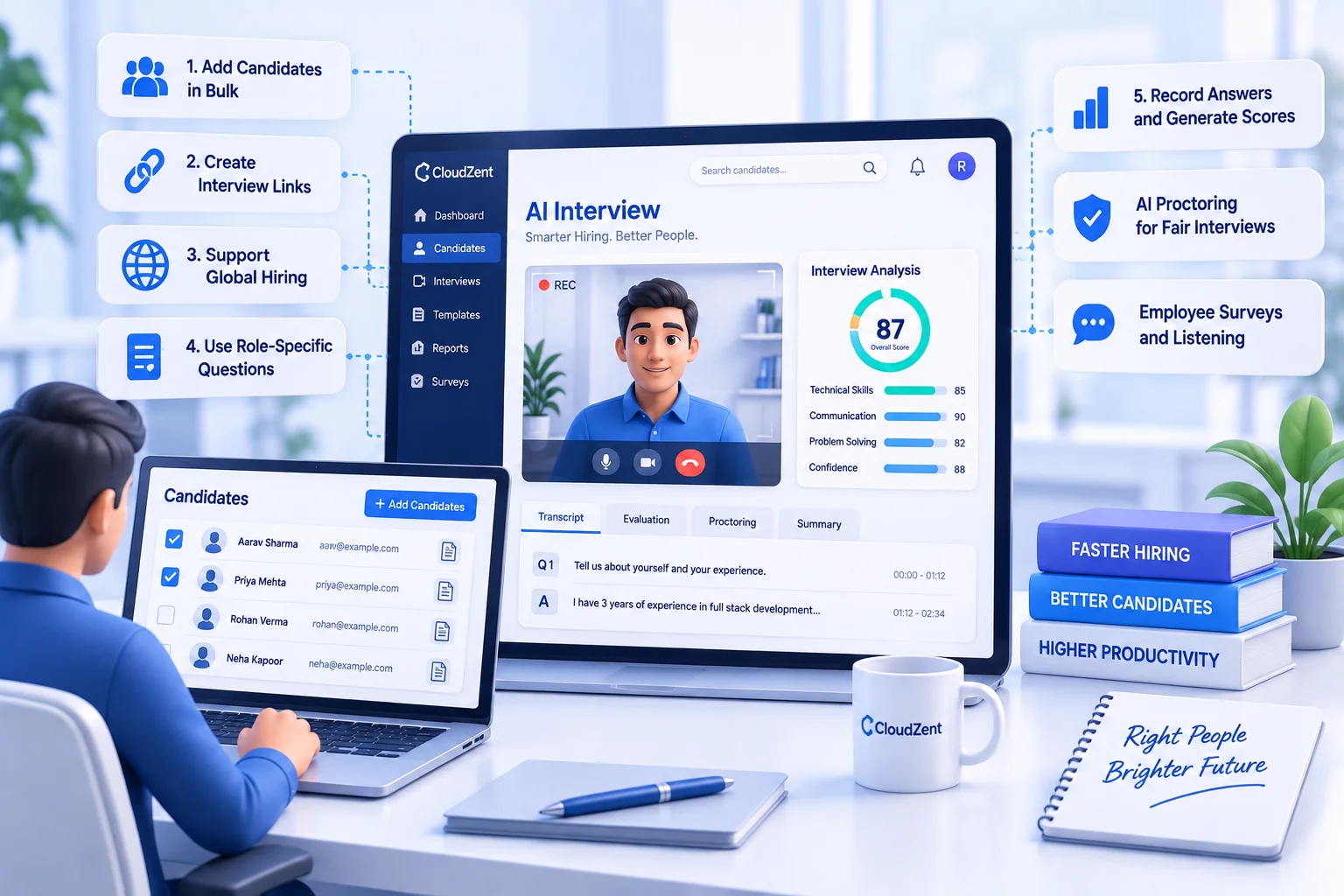
With thousands of applications coming in, screening candidates can be challenging, especially when companies are working with tight deadlines. Important projects need the right people, but as hiring volume increases, a limited number of recruiters can struggle to manage everything efficiently.
Reviewing applications, scheduling interviews, and evaluating candidates takes time. When these tasks are handled manually, it becomes harder to maintain quality and keep track of every candidate's progress.
This is where AI interview tools can help. CloudZent's AI Interview platform is designed to support candidate screening, interview evaluation, and employee feedback. It brings these tasks together in one system, helping recruiters manage the process while maintaining a record of each interview.
What Is an AI interview platform?
An AI interview platform helps companies conduct interviews in a structured way. Candidates receive an interview link, answer role-specific questions, and record their responses. The platform then processes the interview and provides information such as transcripts, scores and delivery metrics.
For recruiters, this means less time spent managing interview logistics and easier access to the information they need to review candidates. CloudZent's AI Interview platform also includes proctoring features and employee listening tools, making it useful beyond the initial screening round.
How CloudZent's AI interview platform helps hire better candidates?
1. Add candidates in bulk
Recruiters can add candidates individually or upload their details using a CSV file. Resumes can also be uploaded along with candidate records. This makes it easier to manage candidate information in one place instead of relying on Excel sheets or email attachments.
Each candidate has a record that includes their details, resume, and interview history.
2. Create interview links
Setting up interviews one by one can take a lot of time when a company is hiring for multiple positions at once. CloudZent's platform allows recruiters to upload a candidate list and create multiple interviews in a single click. Each candidate receives an individual interview link, so recruiters do not need to arrange a separate calendar meeting for every screening interview.
The platform also provides a sample file to help recruiters use the correct format when uploading candidate information.
3. Support global hiring
Not every candidate is equally comfortable interviewing in English. Giving candidates a choice of language can make the interview experience more accessible, especially for companies hiring for global positions.
CloudZent's AI Interview platform allows candidates to choose from 10 languages before starting their interview. They can then record their answers during the session. This allows candidates to express themselves in a language they are comfortable using.
4. Use role-specific questions
Different roles require different skills. A sales position may need questions about customer communication, while a technical role may focus on problem-solving or role-specific knowledge.
With CloudZent's question bank and interview templates, recruiters can set questions based on the role and its responsibilities. Questions can be organized around defined scoring criteria, helping maintain a consistent approach across candidates. Interview templates can also bring together the role, questions, duration, and proctoring settings.
Once an interview is created, its questions remain part of that interview. Changes to the question bank do not alter reports that have already been generated.
5. Record answers and generate scores
One of the key features of an AI interview platform is the ability to keep interview responses together with the questions they answer. Recruiters can use this information to review candidate responses and compare them with the criteria defined.
The goal is to give interviewers more than just a score. They can also refer to the candidate's actual responses and the information behind the evaluation.
Remote interviews can raise questions about whether a candidate completed the assessment. CloudZent's AI Interview platform includes proctoring features that monitor signals during the session.
Important Note
The score is advisory. The system does not automatically reject candidates based on proctoring results. Recruiters can review the available information and make their own decisions.
Conduct employee surveys
CloudZent's platform also includes employee surveys and listening features. Companies can run questionnaires that allow employees to respond by typing, selecting an option, speaking, or recording themselves on camera. This gives employees different ways to provide feedback and can make the process more accessible for people with different communication needs.
Responses can be exported with information such as role, region, and branch. The employee listening feature supports spoken conversations that employees can complete on their own devices. They can choose whether to respond by voice or on camera before recording begins.
Conclusion
Candidate screening is more than reviewing resumes and conducting interviews. Recruiters also need to manage schedules, maintain candidate records, evaluate responses, and keep the process efficient.
CloudZent's AI Interview platform brings these activities together, from bulk interview creation and role-specific questions to recorded answers, transcripts, scoring, and proctoring. Want to see how it works? Contact CloudZent for a demo today.
Related Articles
Ready to hire better?
See CloudZent's AI Interview platform in action. Request a demo today.
Request a Demo