
How service automation solution can boost your referral sales and repeat sales?
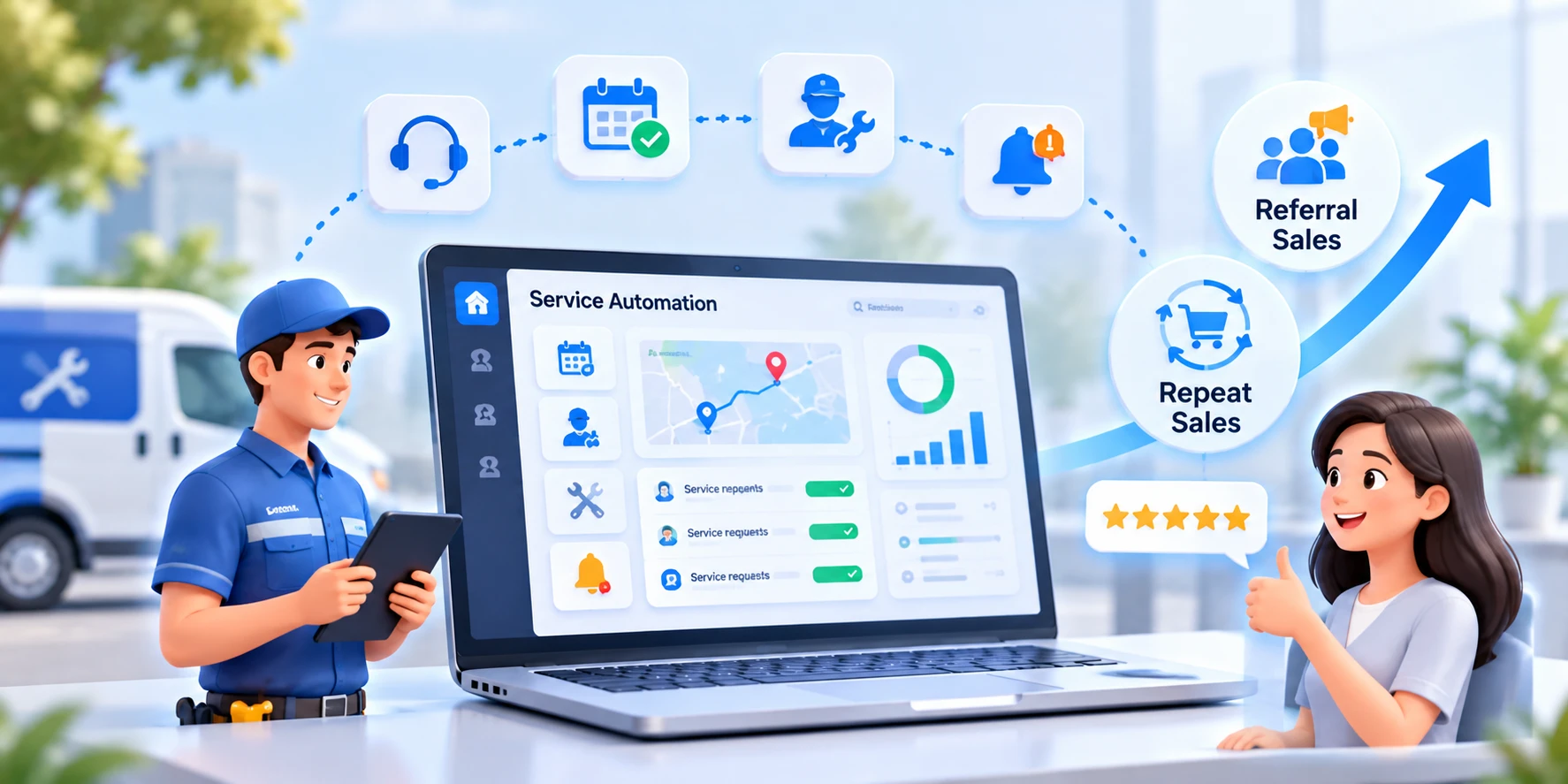
One of the most frustrating experiences for a customer is waiting for an urgent repair while the work is put on hold. A delayed response, a missed appointment or a lack of updates can quickly turn a service request into a bad customer experience.
That's why staying in touch with customers and keeping them informed about their service requests is an important part of building strong customer relationships.
For businesses that manage repairs, maintenance and field service operations, timely communication can make a real difference. But when teams rely on phone calls, spreadsheets and manual follow-ups, keeping track of every request becomes difficult.
This is where service automation can help.
What makes service management difficult?
As a business grows, managing service requests manually on an Excel sheet becomes harder. It comes with the following common challenges:
- Delayed responses – requests get missed when they come through different channels such as calls, social media, emails or helpdesk.
- Scheduling issues – technicians may be assigned jobs/requests without considering their availability or location, etc.
- Poor communication – customers don't receive timely updates about appointments or delays or the exact status of the issue raised.
- Missed follow-ups – pending repairs/service and unresolved complaints can pile up.
- Limited visibility – managers struggle to track jobs and understand what is happening in the field.
5 ways service automation can increase repeat and referral sales
1. Faster responses build trust
When customers report an urgent issue, they want to know that someone is handling it. They shouldn't have to make repeated calls just to get an update.
A service automation application helps teams record requests, assign jobs and track their progress in one place. Managers can identify pending requests and prioritize urgent repairs, while automated notifications can keep customers informed about appointment times and service status.
A faster, organized response helps customers feel that their concerns are being taken seriously. That trust can influence whether they choose the same business again.
2. Timely follow-ups create sales opportunities
Many businesses miss sales opportunities because they don't follow up after completing a service request.
For example, a customer who has had equipment repaired may need routine maintenance a few months later. A customer who purchases a product may also be interested in an extended warranty or a related service.
A service automation solution can help businesses schedule maintenance reminders, track service history and notify teams when a follow-up is due. These reminders give businesses a practical way to stay connected with customers and identify relevant opportunities for repeat sales.
The key is to make follow-ups useful to the customer rather than sending messages simply to promote another sale.
3. Consistent service gives customers a reason to recommend you
Customers are more likely to recommend a business when they feel they can depend on it. Consistent service, clear communication and timely issue resolution all contribute to that experience.
A service application helps standardize how requests are handled, from the first customer contact to job completion. Teams can follow the same process, record details and keep track of open issues.
When customers know what to expect and feel confident about the service they receive, they have a stronger reason to recommend the business to others.
4. Service history helps identify new sales opportunities
A customer's service history can tell a business more than what has been repaired. It can reveal recurring maintenance needs, frequently reported issues and products or services the customer may need in the future.
For example, a company that maintains industrial equipment could use service records to identify customers who are due for preventive maintenance. A business that provides technical support could identify customers who may benefit from an upgrade or an additional service.
When service data is organized, sales and service teams can use it to have more relevant conversations with customers.
Integrating the service application with a CRM system can make it easier to connect service interactions with sales opportunities and customer records.
5. Better service tracking helps prevent lost customers
A request that remains open for too long can damage a customer relationship. If the problem happens repeatedly, the customer may start looking for another provider.
A service automation application helps managers track pending jobs, overdue requests and repeated complaints. Teams can identify issues that need attention and follow up before a small problem becomes a reason for the customer to leave.
Retaining existing customers gives businesses more opportunities to earn repeat sales and build long-term relationships. It also creates more chances for satisfied customers to recommend their services.
Want to explore service automation solution for your business?
Contact CloudZent at sales@cloudzent.com to discuss your requirements today.
Related Articles
Ready to automate your service?
Talk to CloudZent about a service automation solution built for your business.
Contact Us